
As I venture further into more natural living, I have been incorporating healthier ingredients when feasible. Don’t get me wrong, I still use all purpose flour and refined white sugar at times, but when I can I like to use healthier alternatives. These healthy substitutions for baking ingredients can help you move your family towards a healthier, more natural lifestyle without sacrificing flavor.
As in all aspects of life, I like to weigh the risks and benefits of decisions. For example, I may not know with 100% certainty that seed oils are harmful, or how harmful, but because there are affordable and accessible alternatives it is no trouble to avoid them just in case. On the other hand, hearing about the potential “toxicity” of parchment paper has me clutching my giant roll of parchment paper tighter because it makes things so easy to bake and clean that I do not want to give it up! That may be one where the benefits of using it outweigh the risks in my mind.
In this post I will explore the healthy substitutions I feel have been worth incorporating and my experience with these ingredients. There are certainly other alternatives that I may try in the future, but these are the ones with which I have experience.
Sweeteners
Refined white sugar from the grocery store is what I grew up using. I do not think this is horrible if used in moderation, but there are alternatives available that may be better for the body. Here are a few sweeteners I have used to replace white sugar when baking for my family. Of note, I mention glycemic index a few times in this discussion. A lower glycemic index means the sweetener raises blood glucose levels more slowly than one with a higher glycemic index. Lower glycemic index diets have been associated with a lower likelihood of developing chronic diseases such as type II diabetes.
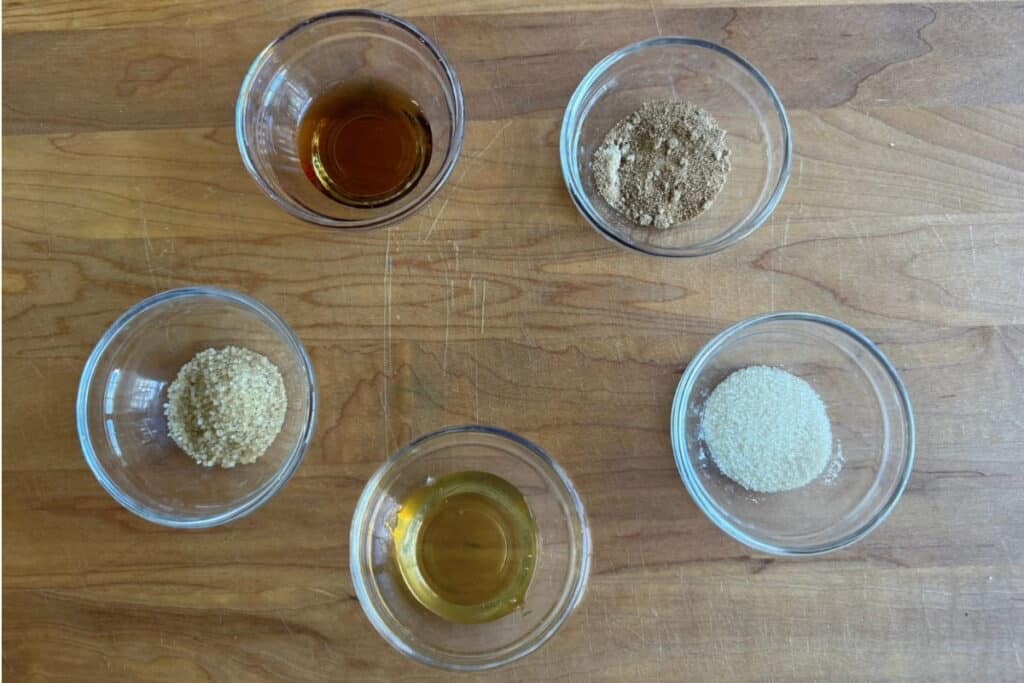
- Honey – Natural and delicious, honey is rumored to have several significant health benefits and will not change the flavor of most baked goods. Honey has natural antibacterial properties (we actually use it for wound care!) due to its low pH and high sugar content. It also contains several beneficial components such as vitamins and minerals. While it should still be used in moderation (after all, it is still sugar), this sweetener has anti-inflammatory effects and may even strengthen the immune system.
- Use approximately 2/3 cup honey to replace 1 cup of white sugar. Other modifications that can be made are to reduce the liquid in a recipe by 1/4 cup if honey is used because it contains water. The oven temperature can also be reduced by 25°F as honey could cause baked good to brown a little more quickly.
- Maple Syrup – There is less evidence of outright benefits of maple syrup in humans when compared to honey. However, both have a lower glycemic index compared to white sugar and maple syrup still provides a less processed alternative for sweetening baked goods. It also provides some vitamins and minerals, similar to honey, and may have antioxidant activity. The benefit to this compared to honey, for me, is that it does not crystallize in the same way honey does and is therefore easy to use. That have been some studies in mice comparing sucrose (white sugar) to maple syrup. The conclusion was that maple syrup was less harmful to insulin resistance, had pre-biotic effects which benefited gut microbiome, and may be more protective of liver function than sucrose.
- Use approximately 3/4 cup to 1 cup of maple syrup to replace 1 cup of white sugar. The other liquids in a recipe may need to be reduced slightly as well. However, I have had good experience without doing this.
- Coconut Sugar – Coconut sugar is made from the sap of the coconut palm tree. It has a lower glycemic index than sucrose, honey, and maple syrup. Coconut sugar contains several vitamins, minerals, proteins, and free amino acids. This can be used in place of any sweetener, but I like to use this specifically to replace brown sugar as it has similar flavor notes. Because the process of rendering sugar from sap is a labor-intensive process, this sweetener can be more expensive than others.
- Use coconut sugar to replace white or brown sugar in a 1:1 ratio.
- Turbinado Sugar – This sugar retains a little more vitamins, minerals, and antioxidants when compared to white sugar. However, formal demonstration of health benefits compared to white sugar are lacking. It does have a slightly lower glycemic index and is less processed, so it is likely preferable to white sugar. I love using this sugar for its texture. Roll cookies in it for a satisfying crunch or use it in cookies for a chewier texture.
- Use turbinado sugar to replace white sugar in a 1:1 ratio.
- Cane Sugar – Evidence of health benefits compared to sucrose is lacking for cane sugar. However, the theory behind this being a slightly healthier alternative is that cane sugar is less refined than white sugar and retains small amounts of things such as vitamins, minerals, and antioxidants. Cane sugar has essentially the same effect on health as white sugar, but is less processed and therefore I don’t mind using this instead of white sugar in small quantities.
- Use cane sugar to replace white sugar in a 1:1 ratio.
Flour
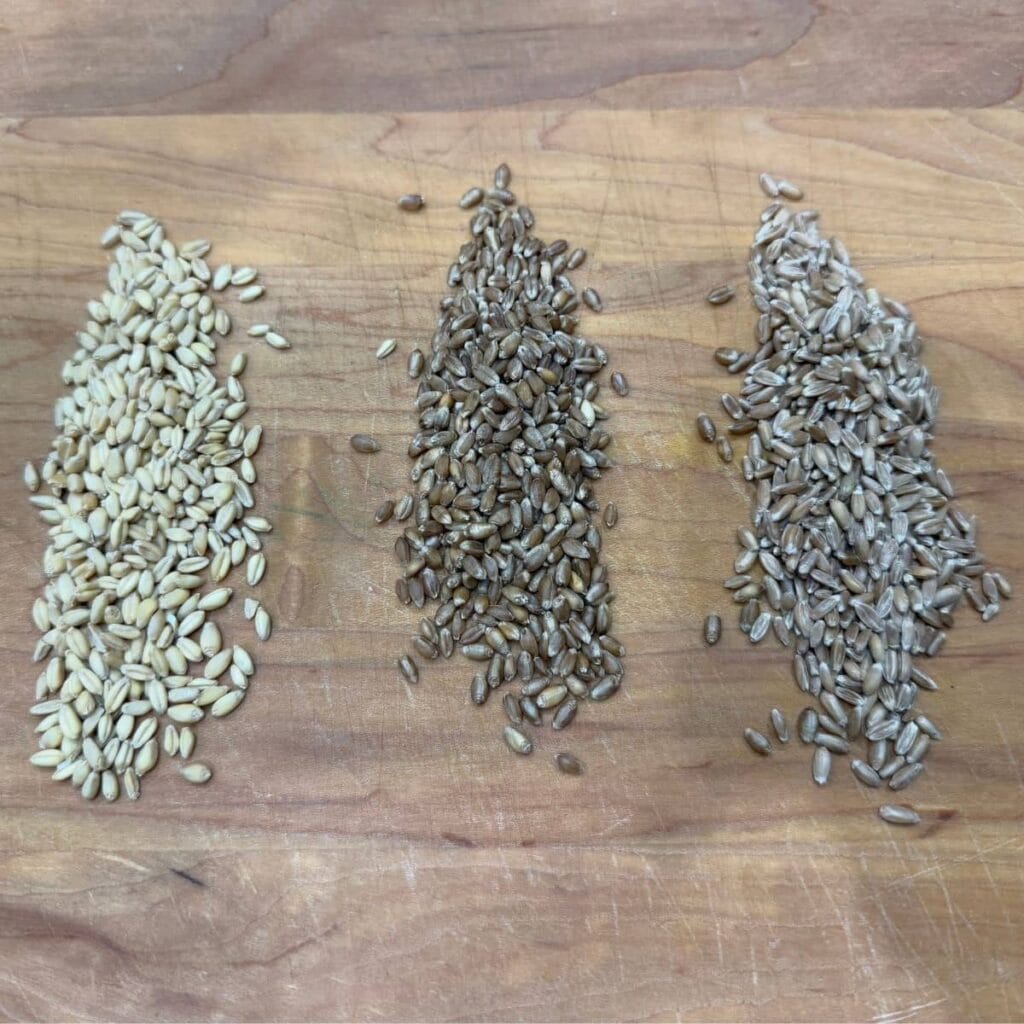
- Fresh-Milled Flour – There has been a lot of recent interest in fresh-milled flour because it retains essential nutrients, many of which are removed or must be added back in to commercial flour. In addition, several sources demonstrate that many of the beneficial nutrients in wheat degrade within a few days after it is milled into flour. I have not come across compelling evidence that store-bought wheat is actually harmful, but I do believe fresh-milled is more nutritious and it tastes amazing as well! See below for a description of the types of wheat and where I use each.
- Hard Red Wheat – This type of wheat has a darker color and nutty flavor. Hard wheats have a higher protein content than soft wheats and develop the most gluten as well. These are perfect for yeasted breads or even sourdough loaves.
- Hard White Wheat – Similar to hard red wheat, hard white wheat has a relatively high protein content and is great for yeasted or sourdough breads. This can also be used for other baked goods such as cinnamon rolls, pizza dough, and rolls. Its mild flavor makes it a versatile wheat that can be used in almost any baked good.
- Soft White Wheat – Soft wheats have a lower protein content than hard wheats and tend to result in a soft, tender crumb. Soft white wheat is perfect for muffins, quick breads, and pastries. It has a mild flavor that does not overpower other flavors in the bake.
- Soft Red Wheat – This wheat is similar to soft white wheat, except that it provides a little darker color and more robust flavor in the final product.
- Khorasan – Khorasan is one of the ancient wheat grains, renowned for its nutritional content and buttery flavor. This wheat is wonderful for pastas, but can be used in other baked goods such as bread as well. It has a relatively high protein content, but does not develop gluten as readily as the hard wheats varieties.
- Spelt – Spelt is another wheat that has a high nutritional content, higher protein content, but less propensity to develop gluten. It can be used in the same baked goods as soft white wheat, but provides a slight nutty, sweet flavor and slightly darker color to the final product. I love using spelt in things such as pancakes, waffles, and muffins.
- Einkorn – This is another ancient wheat grain that has received a lot of attention for its nutritional benefits. However, I have not worked extensively with Einkorn yet. This wheat behaves differently from other wheat varieties and requires practice to perfect!
- Whole wheat flour – If a grain mill is not feasible or desired, store-bought whole wheat flour may be a slightly more nutritious alternative to all-purpose. As mentioned above, flour does lose some of its nutritional value once milled. However, whole wheat does still have a higher fiber content when compared to all-purpose. This flour will result in a darker colored product and could lessen the soft texture yielded by all-purpose flour.
- Unbleached All-Purpose Flour – For those who do not have a grain mill and do not enjoy the whole wheat flavor in flour, all-purpose is still an option. Unbleached flour yields a similar texture to baked goods as bleached all-purpose flour. However, unbleached flour likely retains more vitamin E. Nutritionally, these flours are quite similar, with both having vitamins and minerals added back in to “enrich.” There are concerns about the chemicals used in the bleaching process despite assurances that the exposure is so small that it is not harmful. I do not have definitive proof of harm related to bleaching, but if you want to be on the safe side then go with unbleached. I have not noticed any differences in baked goods when using unbleached vs. bleached flour.
Fats
Many recipes call for canola oil, vegetable oil, shortening, or margarine. This is a controversial topic, as some studies indicate there are health benefits to things such as canola oil, yet others exhibit health concerns. These concerns include consumption of too much omega-6 causing inflammation as well as the production of free radicals when these oils are heated. Because there are readily available alternatives that are thought not to cause the same inflammation, I typically use other fats for baking.
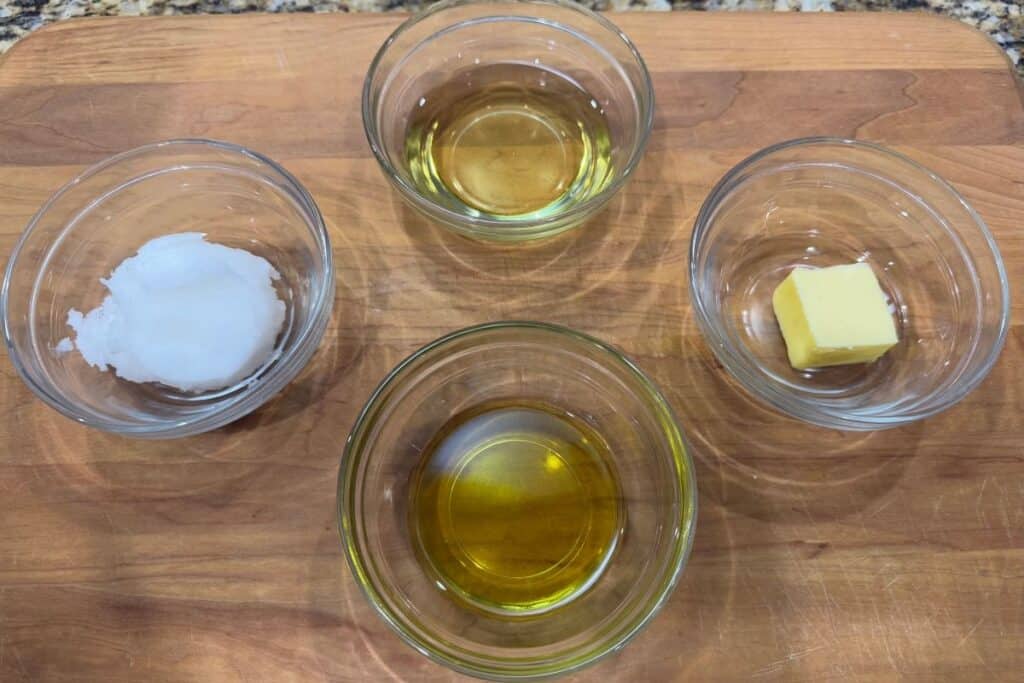
- Butter – Good old fashioned butter is great for baking! This fat gives a delicious, rich, buttery flavor to baked goods and only contains 1 ingredient — cream (excluding the salt in salted butter). This can replace other fats in a 1:1 ratio.
- Coconut oil – Coconut oil was once criticized for its potential harmful effects as it was classified as a saturated fatty acid. However, it was then discovered that it is made primarily of medium chain fatty acids. There are studies that indicate coconut oil may have beneficial effects on lipids, insulin secretion (and therefore glucose), inflammation, obesity, and more. Coconut oil can be substituted for other fats at a 1:1 ratio.
- Solid vs. liquid coconut oil – Coconut oil is solid at room temperature at its most natural state. Fractionated coconut oil undergoes processing to remove some of the fatty acids that cause the oil to solidify. As health benefits are likely tied to those fatty acids, removing them could lessen some of the health benefits. However, I have not read anything indicating this makes the oil actively unhealthy. Therefore, I have both and I use liquid when the recipe calls for something like canola oil and solid when the recipe calls for shortening or margarine.
- Extra virgin olive oil – The Mediterranean diet has gained popularity and is widely touted as having beneficial effects on cardiovascular health and prevention of several chronic disease states including obesity. Studies attempting to discern if the extra virgin olive oil itself is beneficial rather than the entire diet as a whole state that this compound should be recommended over other fats to prevent the development of chronic diseases. In addition, it could increase absorption of carotenoids if used to cook vegetables. Some are deterred by the strong flavor of extra virgin olive oil. However, I have used this in bakes without tasting it. I am a little biased in that I love the flavor or it at baseline, so I would not mind it showing through a little in certain dishes. Keep in mind this oil has a lower smoke point than others.
- Avocado oil – Studies of avocado oil consumption in rats have indicated it may have benefits in diabetes, cardiovascular disease, and cancer. However, this has not been demonstrated in humans. This oil has a neutral flavor and is therefore a good option for baking. It also has a high smoke point, so it can be cooked with at high temperatures.
Eggs

Under no circumstances am I implying eggs are not healthy! I bake with eggs frequently and do think they are a healthy food. However, there may be times when you do not have any eggs or perhaps someone for whom you are baking cannot have them. Below are some alternatives, though I most often just use large eggs for baking.
- Different types of eggs – Chicken eggs are obviously the most commonly used in baking. However, eggs from other birds can work just as well!
- Duck eggs – I have not personally baked with duck eggs, though I have cooked with them and used them to make duck egg mayo. Supposedly, they give a rich flavor and texture to baked items. These might be slightly more difficult to substitute as 2 duck eggs would replace approximately 2 chicken eggs.
- Quail eggs – This was a recent experiment for me. A friend of mine had an excess of quail eggs, so I purchased 6 dozen. Four quail eggs can replace 1 chicken egg. These are supposed to be full of nutrients with a high yolk to white ratio and, in many ways, quails can be much easier to raise in urban environments. These are delicious in baked goods as well as cooking.
- Applesauce – Use applesauce in place of eggs in baking at a ratio of 1/4 cup to replace 1 egg.
- Mashed banana – Likewise, 1/4 cup of mashed banana can be used to replace 1 egg.
- Carbonated water – If you happen to have this on hand, 1/4 cup of carbonated water can be used to replace 1 egg.
It’s Not All or Nothing
Going down the rabbit hole of natural living and healthy eating can be overwhelming. Sometimes I think the stress from worrying about all the potentially unhealthy and “toxic” ingredients can be worse than the ingredients themselves.
I want to encourage anyone looking into this lifestyle that you can make small changes and it does not have to be all or nothing. Don’t have a grain mill? No problem, use unbleached all purpose for now. Don’t have coconut sugar? Use what you have — maybe honey or even store-bought white sugar. Try healthy substitutions when feasible, but make things at home even when the substitutions are not possible.
I am convinced that homemade items, even when more processed ingredients are used, are still healthier than buying them at the store. If all you accomplish is that you make cookies from scratch with all purpose flour and refined white sugar instead of buying the ones on the grocery aisle, that is still an accomplishment and a step towards healthier eating!
What other healthy substitutions have you been using in your baking? Drop some ideas in the comments below!
Leave a Reply